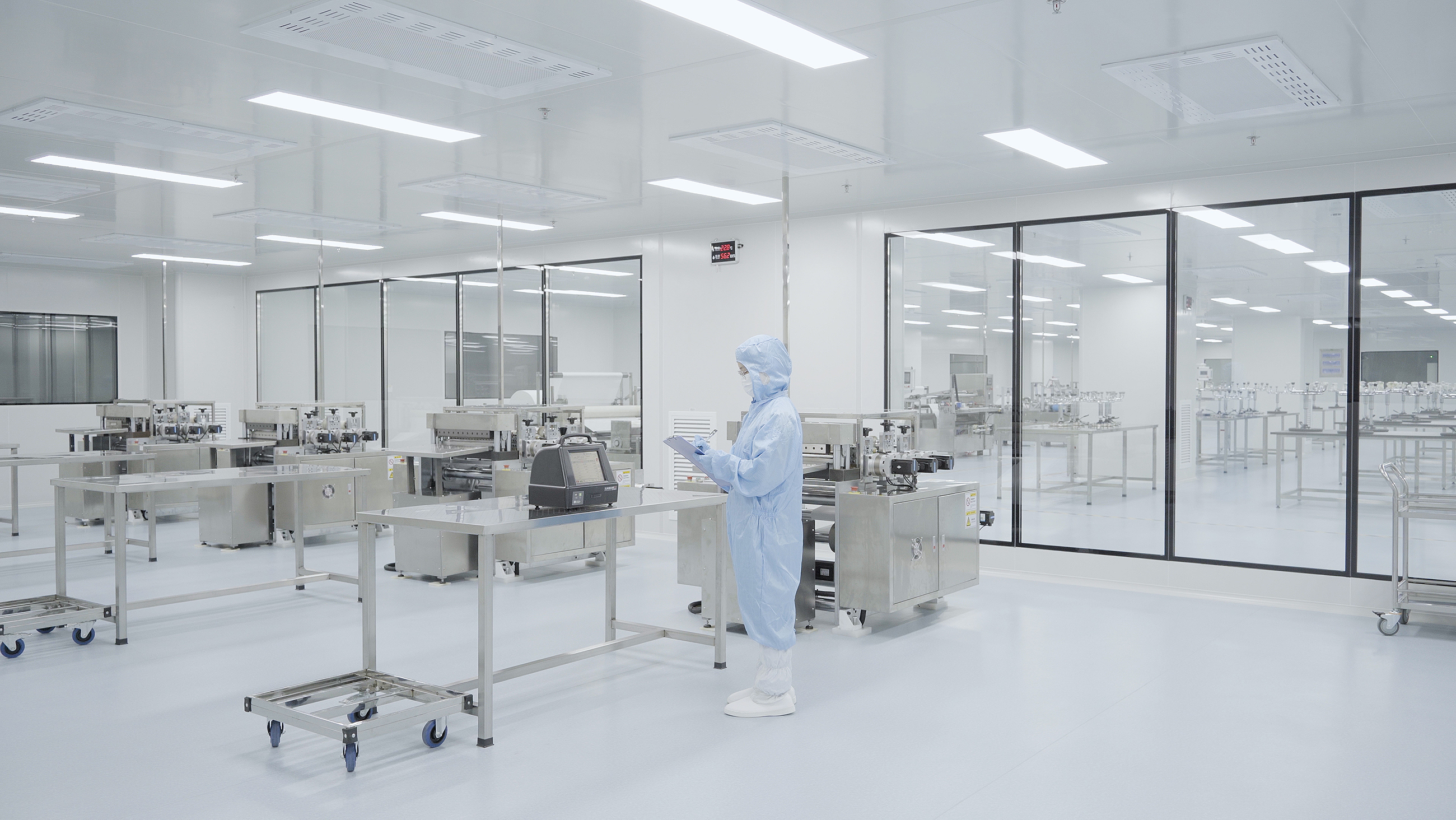
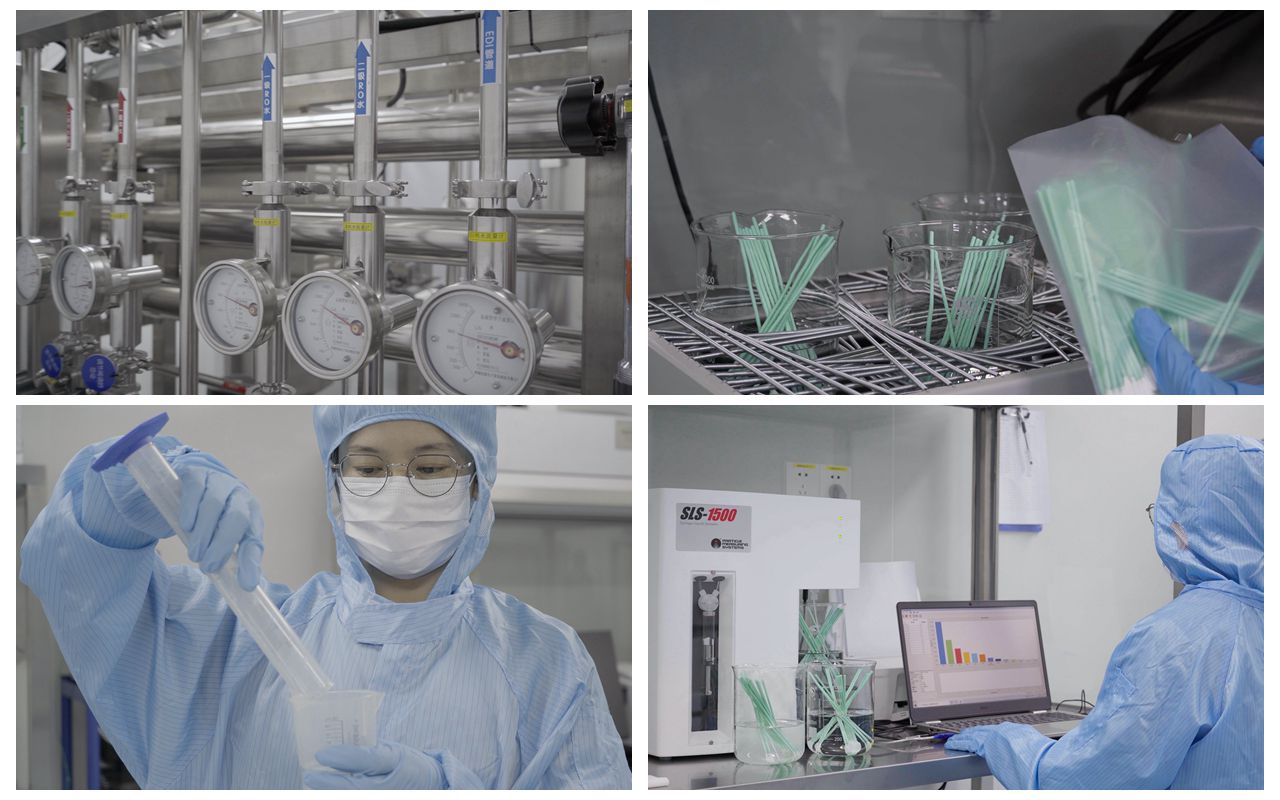
Dust-free cotton swabs are used for industrial cleanings, such as wiping camera lenses, small gaps, hard disks, magnetic heads, microscopes, instrumentation meters, optical optoelectronic products, and printer heads. It is a clean room cleaning consumable, and the clean cotton swabs must be produced under the production requirements of the clean room strictly by professional clean cotton swab manufacturers. Sampling swabs are used in the medical industry, such as collecting liquid microorganisms, DNA, viruses, bacteria, etc. from the mouth, nose, throat, and cervix of the human body. It consists of three parts: handle, connecting rod, and sampling head. The long handle is easy to hold and can be adjusted back and forth while holding, suitable for different people. The soft and slender connecting rod can effectively protect the sampled tissue from harm. The sampling head is composed of nylon fluff and viscose, which is harmless to humans and microorganisms and can maximize the collection and release of samples.
The sampling swab is used to detect Novel coronavirus pneumonia. The doctor will extend the sampling swab into the throat or nose of the examiner, dip a small amount of secretion, inoculate in a special Petri dish, and then place it in a temperature-controlled device Incubate to test whether the patient is infected with Novel coronavirus pneumonia. The collection steps are as follows:
1. Estimate the volume of the product required to completely immerse the sample (10 mL for 1 g of tissue).
2. Mark the collection tube and add the estimated amount of this product.
3. Cut the sample into pieces with a thickness of less than 0.5 cm at a rapid rate.
4. Submerge the tissue fragments completely in the product in the collection tube.
5. Store the collection tube in a place with an appropriate temperature. The storage time should not exceed the long storage time at this temperature. If you want to store it at -20 ℃ or -80 ℃, you need to store the sample at 4 ℃ overnight. Note: Before transferring the sample to -20 ° C or -80 ° C, the protective solution needs to be discarded. The relationship between the common storage temperature and the longest storage time is as follows:
6. Remove the sample from the storage (the sample stored at -20 ℃ or -80 ℃ needs to be melted at room temperature first), and use sterile forceps to remove the tissue fragments from the protective solution.
7. Immediately start RNA extraction or other processing (such as dividing the sample into smaller pieces and saving again). Note: The sample can be freeze-thawed repeatedly 20 times without affecting its RNA quality.
How To Distinguish The Difference Between a Clean Cotton Swab and a Sampling Swab ?
2020 07/23